


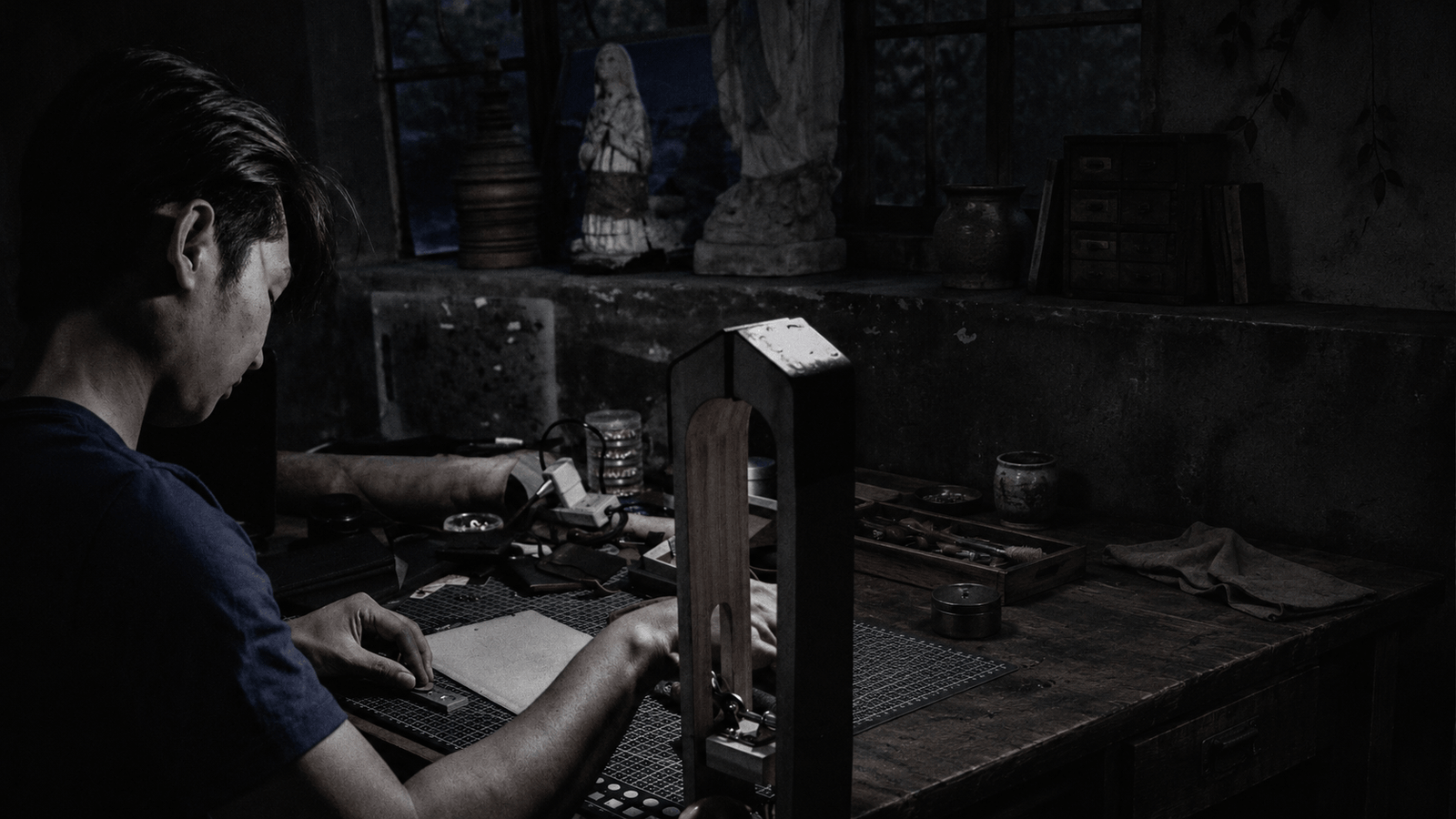
The first future Jo Wong could see for himself was in the church.
He grew up in Calape, Bohol, with a devout mother. He served as an altar boy through elementary and high school and became a working student at the parish convent. The church was where he worked, where he served, and where he began to picture the man he might become.
At about 15 or 16, fresh out of high school, he entered the seminary. He spent five years studying philosophy at the Immaculate Heart of Mary Seminary in Taloto, Tagbilaran, then went to Manila to study theology at San Jose Seminary.
By his second year of theology, he could see the life of a priest more clearly than he had as a boy in Calape. He could also see how much of himself he would have to give to it. Before the next stage of formation, he told his priest formators what he had come to realize.
He still lacked the conviction to become a priest.
His formators arranged for him to spend a year in formation at a parish in Manila, outside the seminary. When the year ended, he applied to return. He still wanted to go back, even though the conviction he had hoped to find had yet to come. His formators asked him to reckon with the time he had already given to that question.
Seven years in the seminary, and he was still unsure. They advised him to stay outside for a while. If he came to believe the priesthood was his calling, the door would be open.
“I felt like a bird that has lost its flock,” Jo Wong recalled.
He had entered as a teenager. So much of his adult life had been shaped by the people he lived with and the work they were preparing to do. Now he returned to Bohol with a door he could still walk through someday and no clear sense of where to go in the meantime.
Finding Leathercraft
Jo Wong took a job at a BPO company. About a year later, he started a family. At work, he found he liked selling. His father cooked food, and Jo took orders from coworkers and made deliveries. He tried real estate and insurance. As a young father, he was looking for ways to earn beyond his salary.
He and his wife also started something they called the “100 Skills Challenge.”
Jo Wong felt there were practical things he had missed learning during his years in the seminary. His wife made cross-stitched portraits, and he was curious about how she did it. While he was exploring the craft, a leatherworking video turned up on YouTube. He bought a basic kit and ordered some leather scraps.
When the scraps arrived, his wife’s uncle asked him to make a sheath for a pocketknife. Jo Wong barely knew how to stitch leather. He made the sheath anyway. His father saw it and asked for a holder for his multitool. Then other people began bringing him requests of their own.
His first customer had given him a simple problem to solve. A pocketknife needed somewhere to go. That turned out to be enough to start a business.

The Birth of Maajo Leather
Jo Wong and his wife gave the business a name that marked where they had come from. The “Ma” and “Jo” in Maajo evoke Mary and Joseph, the namesakes of the two seminaries where he studied. They appear again in their daughter’s name, Mary Josephine. Say Maajo aloud and it recalls maayo, meaning “good,” with the j, associates with the way Boholanos speak.
When he left salaried work to build Maajo Leather full-time, he and his wife agreed she would keep a steady income while he grew the business. Jo Wong wanted to build something that could keep providing for his family beyond his own working years. For now, he had to get through months when orders were thin.
Some months, he took the money he could have paid himself and spent it on leather for the next orders. Nearly every quarter, he wondered if he should go back to a more stable job. He trained in bookkeeping, took on local clients, and taught guitar on Saturdays. Leatherwork was his main occupation. The other work helped him keep doing it.
Then one day, a customer had commissioned a custom bag from Maajo Leather and asked Jo Wong to change a few parts of it. He sent an update. The reply came back with a line he would remember long after the exchange.
“It looks like a school project.”
The customer went on to question whether the bag would be worth the price. That part hit a nerve, too.
It was the first time a customer had criticized his work so directly. Jo remembered how much it hurt. He still had to write back, and he had a choice about which part of the message to answer. He could respond to the insult, or he could address the bag. He told the customer he would try to revise it.
Later, Jo took a lesson from how he had handled the exchange. A remark like “school project” gave him little guidance about what to change. But the customer’s disappointment was real, and he could take it seriously while staying professional. The useful question was what he could do about the work in front of him, even while the words still stung.
Until then, Jo had spent most of his energy learning how to make things by hand. Building Maajo Leather asked something else of him. He had to learn how to talk to a customer who was unhappy with something he had spent hours making. He could feel hurt by the message and still write back with a promise to take another look.
But maybe, just maybe, some customers need to be a little bit kinder too.
The Bird Takes Flight
When Jo Wong looked back on leaving the seminary, he returned to the image of the bird. With a wife, a daughter, and work of his own, he saw something in it he could hardly have seen when he first came home. A bird that had lost its flock could build a nest.
By then, people outside his immediate circle were helping Maajo Leather grow. A provincial product development program brought in designers who asked him to consider what buyers would actually carry and use. The Department of Trade and Industry helped him work out what each piece cost to make. The Department of Science and Technology helped the business acquire machines and improve the layout of the workshop.
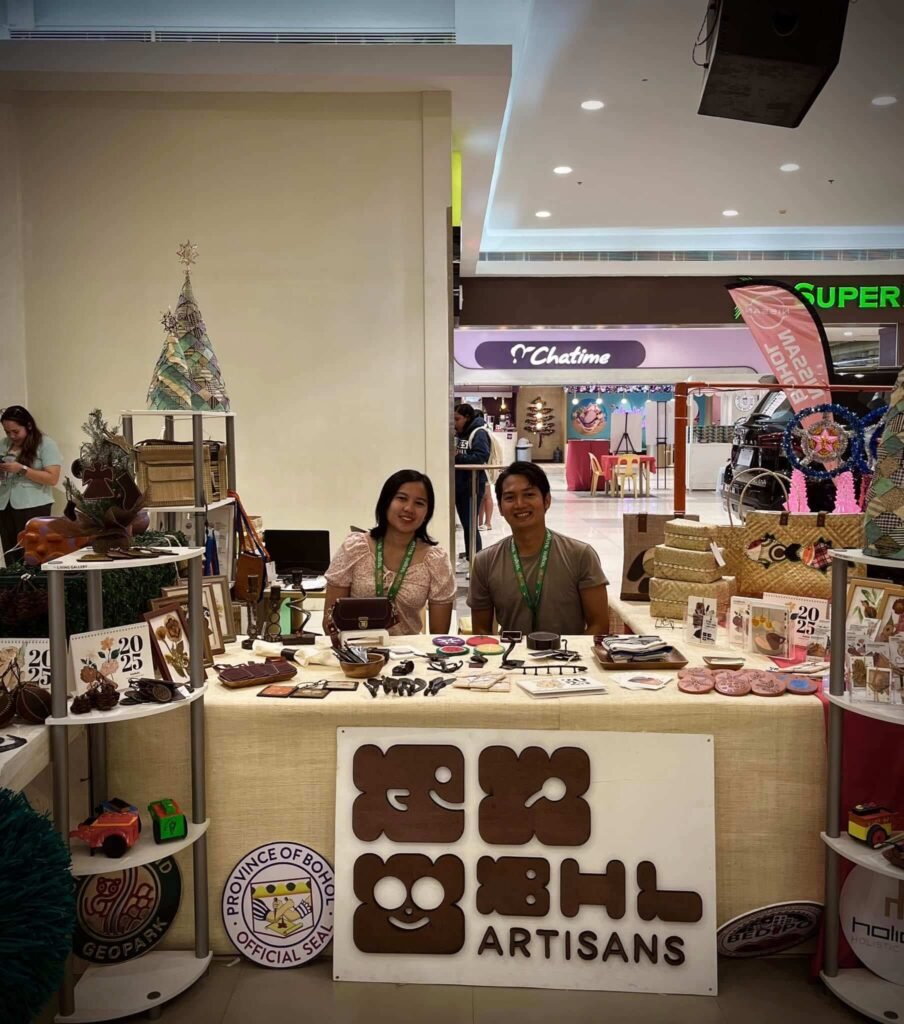
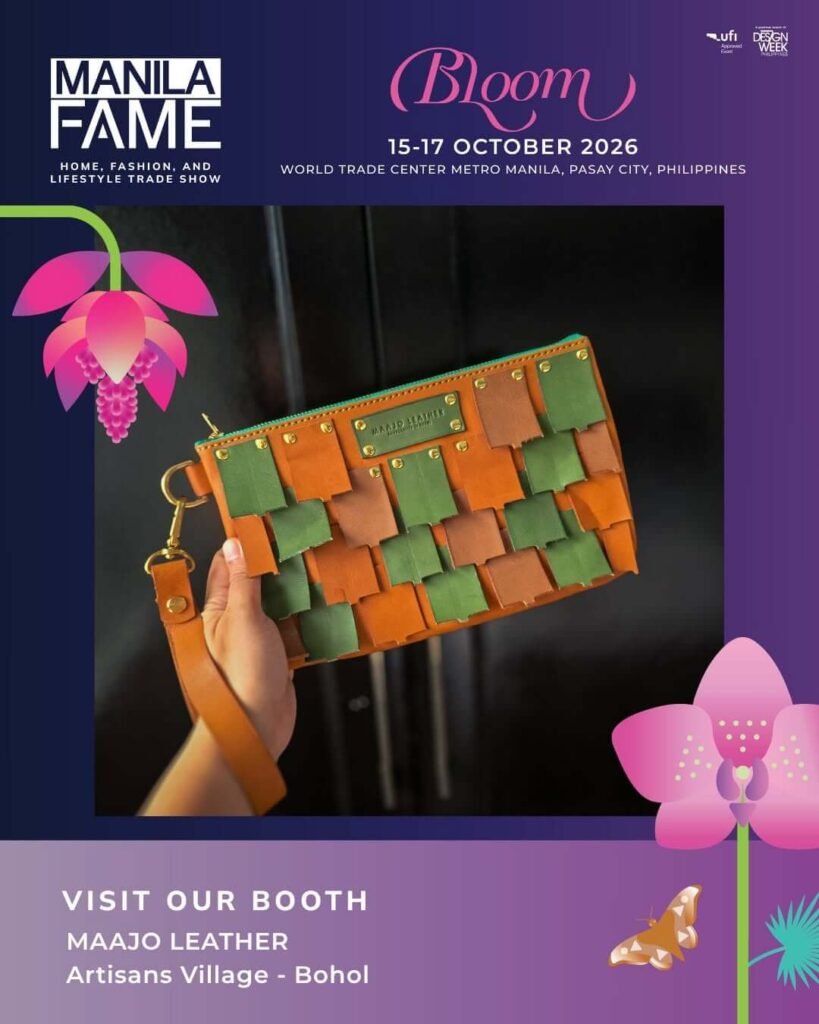
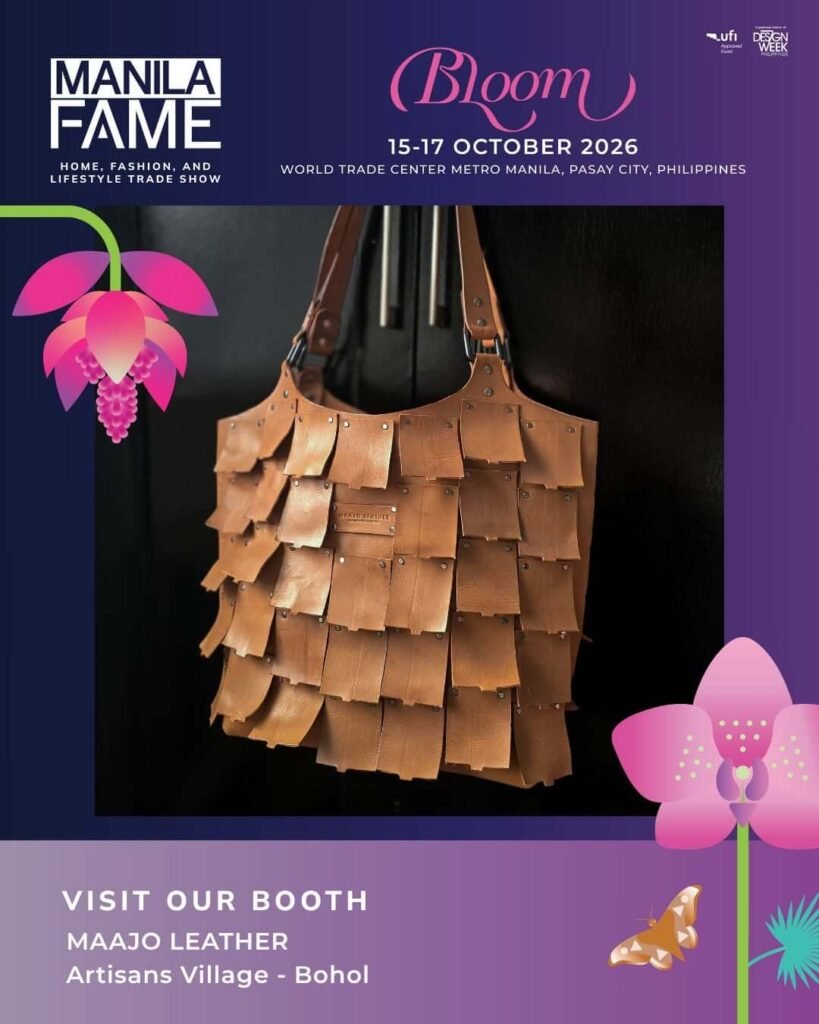
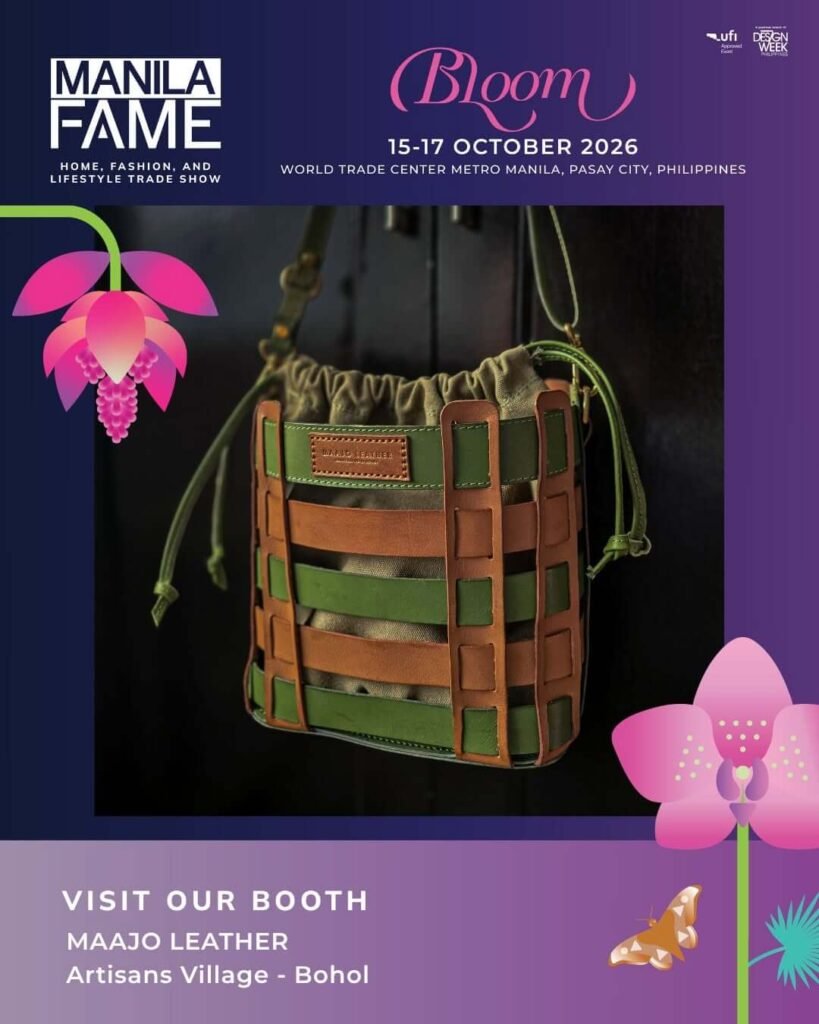
A few of Maajo Leather’s pieces had already made it to Manila FAME before Jo Wong and his wife attended themselves. At the Artisan Village, they met people from companies that could become clients or collaborators. They had shown their work in Bohol and Cebu. Now they could talk to buyers farther from home and imagine where those buyers might take a piece made in Bohol.
One of Maajo’s most successful pieces started with an everyday annoyance. Jo Wong was tired of sitting for hours with a thick wallet in his back pocket. He made a slim one with room for six to eight cards and folded bills. He called it the Dasig.
It became Maajo’s bestseller. People often ordered it for someone else and asked him to engrave a name on the leather. A design Jo Wong made because he was uncomfortable at work became something a customer could give to a father, a partner, or a friend.
Jo Wong has thought about how much more of that work could happen in Bohol. Maajo buys its leather through a supplier in Marikina. He hopes to source it in Bohol someday and create more work in the province. It’s an ambition he is still figuring out. For now, when a Maajo Leather wallet leaves the island, he hopes the person who carries it knows where it was made.
A Different Kind of Calling
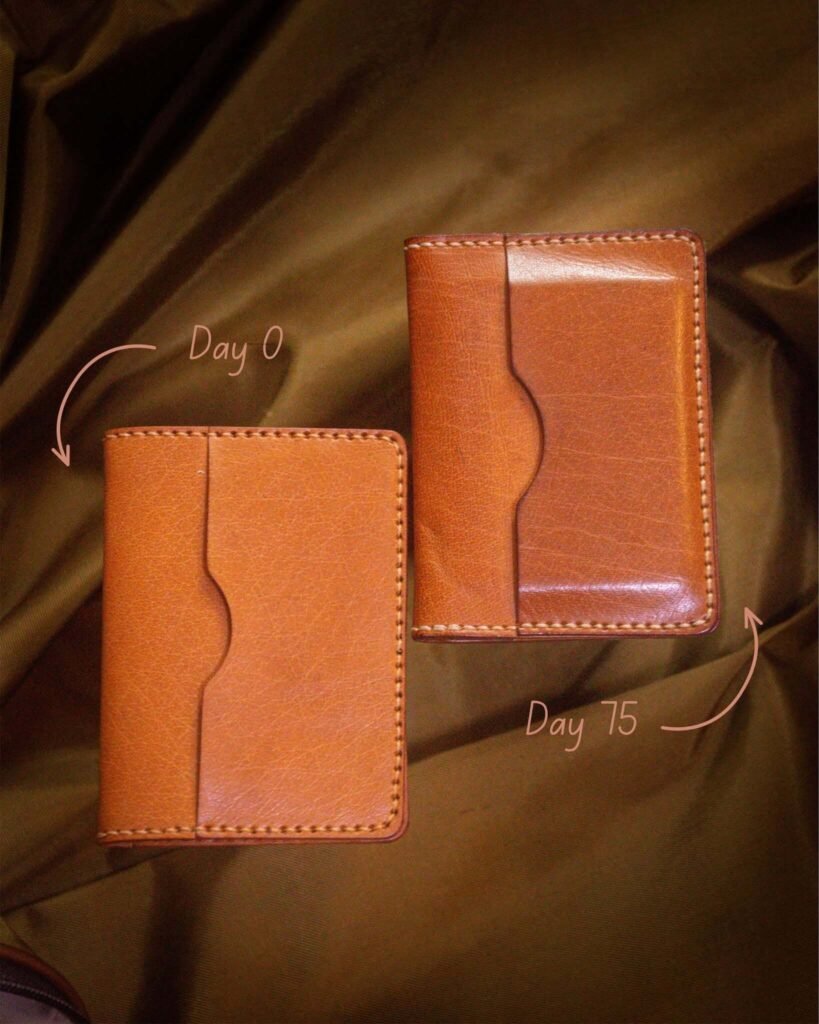
When Jo Wong thinks about what he might leave his daughter, he pictures a wallet. By the time it reaches her hands, the leather might be dark at the edges and soft along the fold. She might recognize it before she opens it. She’d know it by the way her father used to reach for it.
At fifteen or sixteen, Jo Wong went into the seminary believing he would give his life to the church. Seven years later, he had to admit that he still lacked the conviction to become a priest. His formators left the door open. For a while, he wanted to walk back through it. He had spent years preparing for the life on the other side. Outside, there was no promise that another calling would announce itself.
What came instead was a series of ordinary things that asked something of him. A family to provide for. A pocketknife that needed a sheath. A month when he could pay himself or buy the leather he needed to keep working. Looking back, Jo Wong sees God’s hand in the life that opened up after he left. He could only see it clearly once he had lived enough of it.
Sometimes the most honest thing we can do about a calling is admit that the life we once pictured is harder to imagine ourselves living. Then we have to give our attention to the people and the work in front of us. It may take years to understand what they were asking of us.
As a boy in Calape, Jo Wong could picture himself at the altar. He could hardly have pictured his daughter holding a wallet he’d made. Now he hopes she’ll carry it long enough for the leather to take the shape of her hands, too.