



Long before people knew his name, before his songs found their way into concert halls and playlists, and before audiences began singing his lyrics back to him, Joseph Gara was simply a young boy in Alicia, Bohol, who loved to sing.
Joseph’s first musical gig was being the family’s lullaby singer in his family of seven siblings.
It is a small detail, almost ordinary, but perhaps that is where the story of Joseph Gara truly begins. Not under bright stage lights, not in a recording studio, but at home, where music was something personal, something shared, and something that belonged to everyday life.
Years later, that same sense of intimacy would become one of the defining qualities of his music.
His songs would tell stories of longing, loss, belonging, and the complicated emotions that people sometimes struggle to put into words. They would be written in the language he grew up with, carrying the familiar sounds and expressions of home.
And somewhere along the way, the boy who once sang lullabies would become an artist trying to accomplish something much larger than building a successful music career.
He would set out to help restore pride in Bisaya music.
The Boy Who Started Writing His Own Songs

For Joseph, music was never a sudden discovery.
By his third year of high school, he was already writing original compositions. One of his earliest milestones came when he wrote a graduation song, an experience that showed him how music could capture a shared moment in people’s lives.
But pursuing music professionally was not necessarily the obvious path.
Joseph studied management in college, a course that could have led him toward a more conventional career. Yet music remained part of his daily life, increasingly becoming more than a personal interest.
As a self-supporting student, he needed to earn a living. Performing gave him a way to support his everyday expenses while continuing his studies.
He played cover songs and took opportunities to perform wherever he could.
It was practical. Music was something he loved, but it was also work.
During this period, Joseph became part of an alternative rock band called System Tools, performing in local establishments and exploring a musical style quite different from the Bisaya compositions for which he would eventually become known.
The experience introduced him to the realities of performing: working with other musicians, understanding audiences, and learning to make music come alive onstage.
It also provided an early foundation for his creative identity.
Before Joseph Gara became associated with deeply rooted Bisaya songwriting, he was a young musician navigating gigs, rock music, school, and the uncertainty of building a future around something he loved.
Joseph and His “Michael Moment”

There is a familiar dilemma for many aspiring artists: pursue the thing that makes you feel alive, or follow the career that appears to offer more stability.
Joseph knew that tension.
Before Joseph Gara, the musician, there was Joseph Gara, the call center agent. Not seeing any future in pursuing a career in music, Joseph decided to join the booming BPO industry where he saw better opportunities and a larger financial payoff.
But music kept calling him back.
Even in Cebu, in his little corner in the call center he worked for. He still brought his faithful little companion, his weathered guitar, with its worn strings and faded finish bearing the marks of countless performances.
Sometimes, life has a peculiar way of leading us back to where we belong. For Joseph Gara, that moment came not on a grand stage or under the bright lights of a concert hall, but during an ordinary encounter at a pier in Cebu.
At the time, Joseph had begun trading his life as a musician for the promise of a more stable career. He had taken a job, stepping away from the wedding performances and gigs that had once been part of his everyday life.
But fate, it seemed, had other plans.
While making his way home to Bohol, or “miuli sa atoa,” Joseph unexpectedly crossed paths with Michael Yu, co-founder of The Blue Grass Project and an internationally recognized event stylist, florist, and landscape designer.
The two already knew each other well. Having crossed paths at countless weddings, they had developed a friendship built around the very industry where Joseph had spent years performing.
Michael noticed something different. Joseph, once a familiar face at wedding celebrations, had seemingly disappeared from the music scene.
So he asked where Joseph had been and why he hadn’t seen him performing lately.
Joseph, with a hint of cheekiness, gave a simple answer.
“I’ve started working.”
But Michael wasn’t satisfied.
He pressed further, asking Joseph how much he was earning at his new job.
When Joseph told him, Michael didn’t hesitate. His response was direct, almost matter-of-fact.
“Balik sa Bohol, tagaan ka nakog gig.”
Come back to Bohol. I’ll give you gigs.
Just like that.
No elaborate promises. No lengthy conversation about dreams or taking risks. Just a few words from someone who knew Joseph’s talent and believed there was still a place for him in music.
What might have seemed like a casual exchange between two friends became a pivotal moment in Joseph’s life.
Here was a man who had begun settling into the security of a regular job, suddenly being offered a chance to return to the uncertain world of performances, bookings, and music.
But this time, he wouldn’t be returning empty-handed. Someone was willing to open a door for him.
And Joseph chose to walk through it.
Looking back, there is something remarkable about the simplicity of that encounter. A musician searching for a practical livelihood, a friend who recognized his potential, and a chance meeting at a pier that helped redirect the course of a career.
Perhaps Joseph’s story would have unfolded differently had he not crossed paths with Michael that day.
But he did.
And what followed was a journey that would eventually take him from performing other people’s songs at weddings to writing original Bisaya compositions that audiences would one day sing back to him.
In many ways, Joseph’s return to Bohol was also a return to himself.
Because sometimes, destiny doesn’t arrive with applause or a spotlight.
Sometimes, it simply looks you in the eye and says:
“Balik sa Bohol, tagaan ka nakog gig.”
Finding a Voice in Bisaya

By 2016, Joseph was already writing songs. But a songwriting competition would push him to think more deliberately about his musical direction.
He began studying songs that had won in previous years, listening closely to their compositions and considering what he could bring to the competition that would feel different.
Rather than simply following what other artists were doing, he wanted to explore another possibility.
He found it in Bisaya music.
The Visayan Pop Songwriting Campaign, also known as Vispop competition attracted around 500 entries, with Joseph’s composition making it into the final six before emerging as the winner.
For an artist who had spent years playing cover songs and performing with an alternative rock band, the achievement marked an important change.
It was not simply proof that he could write an award-winning song. It helped open the door to a musical direction rooted in language, culture, and local storytelling.
The song Pag-hunas, became a turning point in his career, would become closely associated with this period of artistic growth.
But perhaps the more consequential change happened in how he began to understand his purpose as a songwriter.
What started as a smart scientific decision for a competition has now become a passionate mission that helps guide his work. As Joseph puts it, “I’m trying to win back the pride of the Bisaya, the pride of the place.”
For him, writing in Bisaya is not merely a stylistic choice or a way to differentiate himself in the music industry.
It is an expression of belonging.
It is a way of telling stories without having to abandon the language in which those stories were first experienced.
And it is a way of reminding listeners that their own culture, their own expressions, and their own everyday lives are worthy of music.
Listening to Joseph Gara’s compositions, one begins to understand why his music resonates with listeners who recognize their own experiences in his stories.
Joseph’s music has a way of finding its way into the hearts of listeners, especially those who see fragments of their own lives reflected in his stories.
From Pag-hunas to the heartbreaking Sugid ni Maria which won the 40th Cebu Popular Music Festival, or Cebu Pop, his songs carry emotions that feel deeply personal yet universally familiar.
And then there’s my personal favorite, Uli, a song that never fails to bring me near tears.
There’s something about the moment Joseph begins to sing:
“Woahhh… Mouli na ako sa atoa.”
(I’m coming home to where I belong.)
Perhaps it’s the longing for home, the memories of people and places we hold dear, or the quiet ache of wanting to return to a time we can never quite get back.
Whatever it is, Uli captures a feeling that words alone often struggle to explain.
And perhaps that is Joseph Gara’s greatest gift as a songwriter: he doesn’t just tell his own stories. Somehow, he makes us feel as though he’s telling ours, too.
More Than a Singer: The Work Behind the Music
Success brought new opportunities.
Following his breakthroughs in songwriting, Joseph found himself participating in interviews, speaking at workshops, and becoming more involved with the community of musicians and songwriters around him.
But the attention also brought responsibilities that audiences rarely see.
Being a professional musician involves far more than writing songs and performing them.
A singer-songwriter must often become a producer, organizer, promoter, and businessperson.
There are concerts to plan, venues to secure, collaborators to coordinate, and audiences to reach.
There is also the difficult reality of sustaining a career in an industry where talent does not automatically guarantee financial stability.
For Joseph, however, the work is inseparable from the life he has chosen.
When asked about the sacrifices he had made for music, he reflected on how much he genuinely loves what he does.
His career has certainly demanded commitment, but he does not appear to measure its value solely through conventional ideas of success.
The opportunity to wake up and continue creating music matters deeply to him.
Still, passion alone is not enough.
He repeatedly returned to the importance of understanding the industry, working consistently, and taking responsibility for one’s own progress.
It is a lesson that extends beyond musicians.
Loving your craft may explain why you begin.
Learning how to sustain it is what allows you to continue.
When Bohol Sang Back

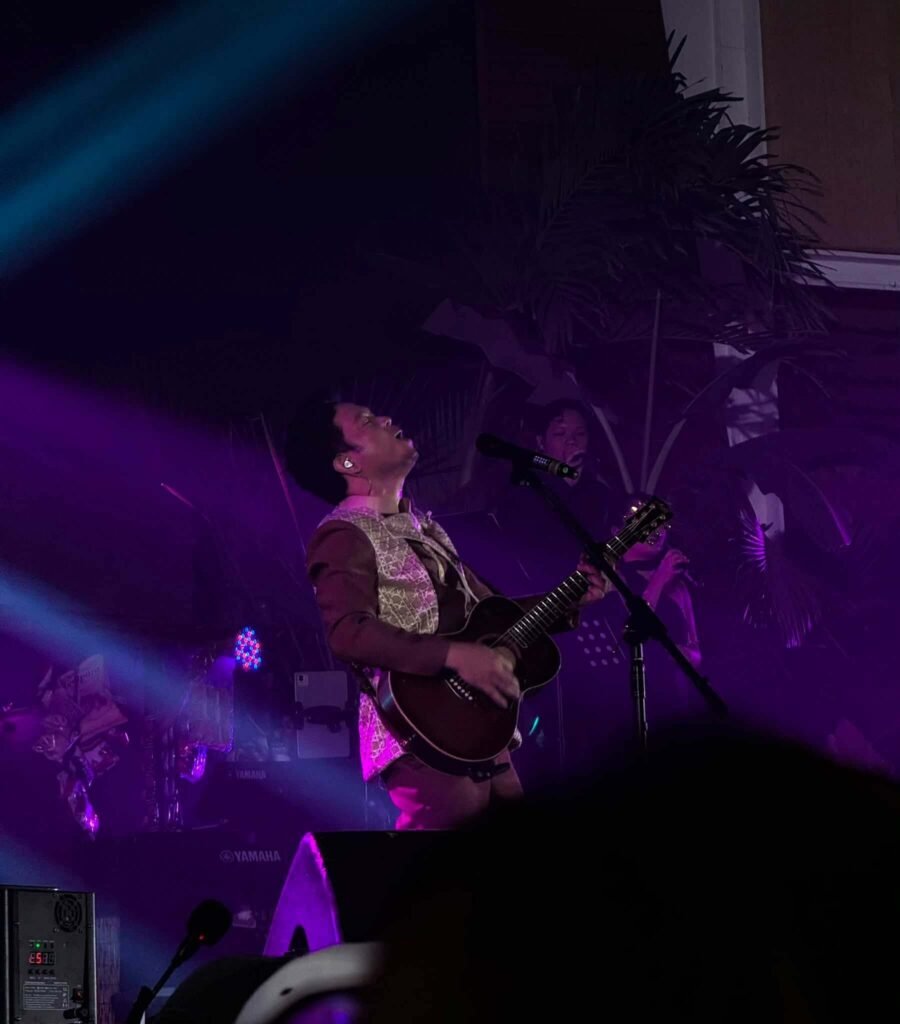
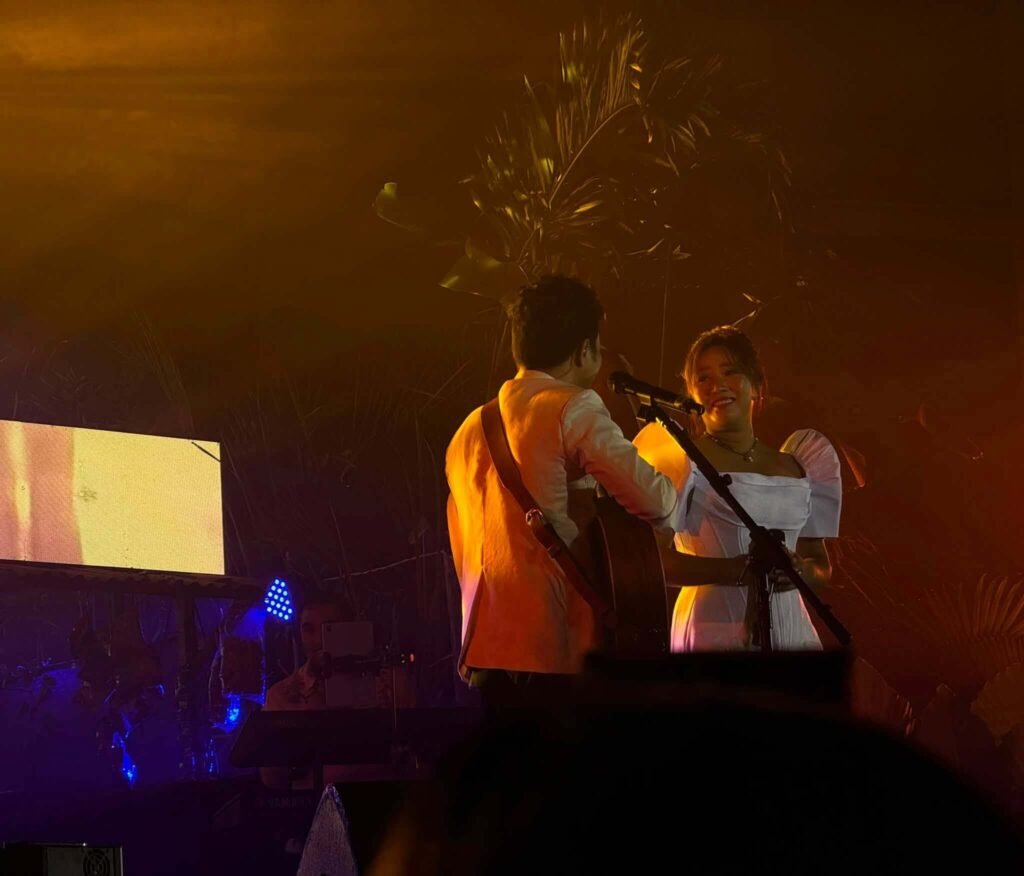
One of the most meaningful chapters in Joseph’s recent career came on June 27, when he staged his first major concert featuring his original music.
The concert was called Uli (or Homecoming).
It was a fitting name for an artist whose work has become so closely tied to the idea of belonging.
For Joseph, homecoming was more than a concert title. It reflected the emotional foundation of his music: the idea that wherever people go, and however much their lives change, there is something powerful about remembering where they came from.
The production celebrated original compositions and brought together different musical elements, including a performance involving the Loboc Children’s Choir.
What unfolded was more than a conventional live show.
Joseph recalled audiences singing along to his songs, including younger listeners who knew the lyrics.
The concert combined cultural expression with the energy and accessibility of popular music. It demonstrated that songs grounded in Bisaya identity could fill a venue and create a shared experience across generations.
For an artist who had spent years developing his sound, hearing people sing those compositions back to him must have offered a particularly meaningful kind of validation.
His songs were no longer only his.
They have become part of other people’s lives.
The response was encouraging enough that audience members were already asking about another performance.
Joseph and his team began discussing the possibility of staging a second concert, potentially in a larger venue.
But beyond the commercial success of the evening, Uli Major Concert revealed something important about the future of local music.
There was an audience for original Bisaya songs.
People were willing to show up, listen, celebrate, and participate.
The demand was real.
And for Joseph, that possibility opened the door to a much larger conversation.
Building a Future for Bohol’s Musicians
When Joseph was asked, “What would it take for Bohol to develop a stronger, more sustainable music industry?”
Joseph’s answer was both practical and revealing.
He believes artists must first learn to take initiative rather than depend entirely on institutions to create opportunities for them.
He spoke about the importance of understanding how the music business works, developing a professional identity, and building projects that can attract an audience.
He also recognized the support he had received from the local government in bringing his major concert to life.
But when asked what concrete support could make a lasting difference for musicians in Bohol, he identified one priority.
A proper concert hall.
Not simply another venue that can accommodate a performance, but a dedicated space designed with musicians and audiences in mind.
He envisioned an indoor venue with appropriate acoustics and the capacity to hold around 300 people, alongside spaces where artists could rehearse, collaborate, and conduct workshops.
It was a strikingly specific answer.
Rather than asking only for more events or temporary funding, Joseph was thinking about infrastructure that could continue supporting musicians long after a single concert had ended.
A dedicated performance space could provide local artists with a place to develop their craft, host original productions, and introduce audiences to new music.
His vision suggests that growing a creative industry requires more than discovering talented individuals.
It requires building an environment where that talent can develop.
For a province widely recognized for its tourism attractions, the conversation also raises another possibility: Bohol’s cultural identity could become an increasingly important part of its creative economy.
Music, after all, offers visitors something that beaches, resorts, and sightseeing alone cannot provide.
It allows them to experience the stories of a place through the voices of the people who live there.
And for local communities, it offers something equally important.
A reason to celebrate their own artists.
An Old-School Musician in a Digital World

Despite the cultural themes that define much of Joseph’s music, his approach to building a career is not trapped in the past.
He understands that today’s music industry operates very differently from the one he entered as a young performer.
Streaming services, short-form video platforms, and social media have changed how musicians find audiences and promote their work.
Joseph mentioned about making his songs available on Spotify, Apple Music, TikTok, and other digital platforms.
He was particularly interested in how TikTok could introduce listeners to new music and direct them toward streaming services.
For emerging musicians, his advice was clear: writing a good song is only part of the responsibility.
Artists must also learn how to promote it.
He described the significant amount of content that musicians may need to prepare before and after releasing a song, illustrating how demanding digital promotion has become.
The modern independent musician is expected not only to create music but also to document, package, publish, and promote it.
For someone who began his journey singing lullabies and performing in local establishments, it is a remarkable evolution.
Yet Joseph appears to recognize that adapting is necessary.
His own musical roots remain grounded in Bohol, but the tools available to reach an audience now extend far beyond the province.
A Bisaya song can find its way onto a playlist in Manila, reach a Filipino working overseas, or become the soundtrack to a short video shared by someone who has never visited Bohol.
The possibilities are wider than ever.
So is the work required to take advantage of them.
The Advice He Would Give His Younger Self
For Joseph, talent without the willingness to work is not enough. Artists should develop discipline and consistency.
It is a perspective shaped by years of experience: performing to support himself as a student, building a reputation through live shows, experimenting with different musical styles, winning songwriting competitions, and eventually producing a major concert built around his own compositions.
None of those milestones happened simply because he loved music.
They required effort beyond the act of creating.
And perhaps that is one of the most revealing things about Joseph Gara.
Behind the emotional compositions and deeply cultural themes is an artist who thinks seriously about the business of being an artist.
He is not content merely to write beautiful songs.
He wants to build a career that allows him to keep writing them.
What Remains When the Musician Grows Old?
When he is old and gray, what legacy does Joseph Gara hope to see?
For someone who has spent years building a career in music, the answers could have been numerous.
More awards. Larger concerts. Wider recognition. Financial success.
But Joseph’s thoughts turned toward the future of his songs.
He hopes younger generations will still be singing them.
He imagines a time when the people listening to his music may no longer know the interviews he gave or the stories behind his career.
Perhaps they will not recognize his face.
Perhaps the details of his journey will have faded from public memory.
But if the songs remain, then something important will have survived.
He hopes his compositions will continue inspiring people long after their original release, and that their deeper meanings will remain relevant to generations who have yet to hear them.
It is an ambition that goes beyond fame.
Joseph Gara wants his music to endure.
And perhaps that is why his connection to Bisaya songwriting matters so much.
Languages carry memories. Songs preserve expressions, emotions, and experiences that might otherwise disappear as communities change.
When an artist writes in the language of home, a composition can become more than a personal achievement.
It becomes a small piece of cultural memory.
A record of how people spoke, what they felt, and what mattered to them.
In Joseph’s case, it is also a reminder that the stories of ordinary Boholanos deserve to be heard.
The Music That Brings Us Home
Joseph Gara’s journey is not the story of an artist who found success overnight.
It is the story of a boy from Alicia who loved singing, a student who performed to earn a living, a young musician who experimented with alternative rock, and a songwriter who eventually found a deeper sense of purpose in his own language.
It is the story of someone who learned that music could be both a profession and a responsibility.
A profession that requires discipline, resilience, and the ability to adapt.
And a responsibility to create something meaningful enough to be remembered.
There is a certain beauty in how his journey has unfolded.
He began by singing lullabies at home.
Today, his compositions have become songs that other people carry into their own homes, memories, relationships, and experiences.
And if his greatest hope comes true, those songs will continue traveling long after he is gone.
Somewhere in Bohol, years from now, a young person might discover one of his compositions for the first time.
They might sing it without knowing about System Tools, the songwriting competitions, the wedding performances, or the concert called Uli.
They might not know the name of the boy from Alicia who once sang lullabies to his family.
But they will know the melody.
They will know the words.
And perhaps, in hearing them, they will recognize a feeling they have always known but never quite understood how to express.
That is the legacy Joseph Gara hopes to leave behind.
Not simply a collection of songs, but something that reminds people of who they are and where they belong.
Because sometimes, the most powerful thing music can do is bring us back home.